https://www.ted.com/talks/david_gallo_shows_underwater_astonishments
Enjoy this TED talk on interesting creatures living underwater! There are so many diverse creatures lurking in large bodies of water that we know little about. This TED talk illustrates just how interesting some of these underwater organisms are and illustrates the importance of trying to preserve each and every one of them.
Reference:
Underwater astonishments. (n.d.). Retrieved November 17, 2015, from https://www.ted.com/talks/david_gallo_shows_underwater_astonishments
Tuesday 17 November 2015

Saturday 14 November 2015
AS A WHOLE
What
Can Your Community Do to Help?
OVERALL:
•Spread awareness and
tell your friends about these issues in your neighbourhood.
•Reduce capturing,
harming and killing of these particular species.
•Report any sightings
to increase data on the endangered or concerned species.
•Prevent planting
invasive species in your backyard ponds/lakes, especially the Eurasian
Water-milfoil, which clogs spawning sites of fish.
•Think twice about
bringing home exotic plants from other countries.
•Prevent switching
plants, fish or other wildlife from one body of water to another.
•Promote community
clean up initiatives in your area to reduce pollution in the waters.
•Promote less habitat
degradation within your community.
•Return all caught fish
to their natural habitat upon capture.
•Think twice before
tossing that fishing rod in the water!

Image Reference: https://s-media-cache-ak0.pinimg.com/736x/9f/63/50/9f63507d926042185f7a0357891b393d.jpg
Thursday 12 November 2015
Want to help the Grass Pickerel, the Bridle Shiner and the Pugnose Shiner?
What can the public do to help the Grass Pickerel?
- Community run initiatives to help re-plant native vegetation in the locations that are suffering the most
- Increasing awareness of this fish species with the public may also help to prevent its classification from worsening
- Spread the word! Advocate for fisherman to not be allowed to commercially fish the Grass Pickerel
Help the Bridle Shiner
- Educate the community and your peers on the Eurasian Watermilfoil, an invasive species that is abundant in the waters of the Kingston region, and about the damage it does to fish habitats
- Educating the public on how to identify the invasive plant would be the first step
- Avoid planting this invasive species
- Remove or report any sightings of the Eurasian Watermilfoil

http://saveblacklake.org/system/assets/general/milfoil-06.jpeg
Pugnose Shiner?
- Join the community, host outreach programs in Kingston to educate the public
- Running of community clean-up days are a great solution to help reduce the polluted run-off into the lakes and ponds where the fish reside
- Avoid polluting the waters where these habituate
- Community run initiatives to help re-plant native vegetation in the locations that are suffering the most
- Increasing awareness of this fish species with the public may also help to prevent its classification from worsening
- Spread the word! Advocate for fisherman to not be allowed to commercially fish the Grass Pickerel
Help the Bridle Shiner
- Educate the community and your peers on the Eurasian Watermilfoil, an invasive species that is abundant in the waters of the Kingston region, and about the damage it does to fish habitats
- Educating the public on how to identify the invasive plant would be the first step
- Avoid planting this invasive species
- Remove or report any sightings of the Eurasian Watermilfoil

Eurasian Watermilfoil
Image Reference: http://saveblacklake.org/system/assets/general/milfoil-06.jpeg
Pugnose Shiner?
- Join the community, host outreach programs in Kingston to educate the public
- Running of community clean-up days are a great solution to help reduce the polluted run-off into the lakes and ponds where the fish reside
- Avoid polluting the waters where these habituate
Helping the Atlantic Salmon
Some suggestions for what the public can do to reduce the impact on
the habitat of the Atlantic Salmon are:
- Minimize the elimination of trees and vegetation on land
- Only replant native vegetation and trees near channels of water as this can help prevent soil erosion
- Refrain from building structures on steep slopes (this keeps them in their natural condition)
- Refrain from cutting down trees and other vegetation close to Atlantic Salmon habitats
- Release all caught Salmon back to their natural habitat
- Or better yet, keep that fishing rod reeled in!

Image Reference:
Notice – No Fishing Allowed (Yellow) Sign or Sticker - #4. (n.d.). Retrieved November 12, 2015, from http://www.victorystore.com/notice-no-fishing-allowed-4.html
Tuesday 10 November 2015
Differences YOU Can Make
AMERICAN EEL

As members of society
there are many different things that we can do to help reduce commercial
harvesting of the American Eel!
-
Pledge to
decrease fishing quotas of the American Eel, purchase less from stores
-
Advocate for
fishermen to require a fishing permit for the American Eel
-
Advocate to
increase fish licensing fees of the Eel (Using the funds for conservation of
the Eel)
-
Create a
petition to implement a policy in which all Eel caught within the Kingston
region be returned to the waters (Dead or alive)
-
We could also
develop a moratorium on the American Eel thereby completely preventing
fishermen from seeking these fish out
Increase overall awareness to the public of this threatened species and pledge to get the
conversation started!

Monday 9 November 2015
Major Threats to Our Species in the Kingston Region
The major threat that we believe is more detrimental to the population size for each of our top 5 species in the Kingston Region is outlined below.
American Eel
American Eel
Major Threat: COMMERCIAL HARVESTING
Ever since the Japan tsunami in 2011, the Asian demand for American eel has increased, causing a drastic decrease in eel populations1. Locally, turbines also cause a number of deaths in the species, leading to the species’ decline in population.
Ever since the Japan tsunami in 2011, the Asian demand for American eel has increased, causing a drastic decrease in eel populations1. Locally, turbines also cause a number of deaths in the species, leading to the species’ decline in population.
Pugnose Shiner
Major Threat: POLLUTION
The pugnose shiner requires a clear and vegetated habitat in order to persist easily. Pollution is the main cause to their habitat degradation, leading to murky, unhealthy waters. These polluted habitats prevent this species from navigating, foraging and spawning effectively - ultimately causing a reduction in the population.
The pugnose shiner requires a clear and vegetated habitat in order to persist easily. Pollution is the main cause to their habitat degradation, leading to murky, unhealthy waters. These polluted habitats prevent this species from navigating, foraging and spawning effectively - ultimately causing a reduction in the population.
Atlantic Salmon
Major Threat: DAMS AND HUMAN AGRICULTURE
Increased human agriculture intensifies soil erosion and
reduces the forest cover, which keeps their habitat streams cool in
temperature. Atlantic salmon prefer this cooler water to live. The combination
of soil erosion and the implementation of dams alters water flow, in turn
causing silt to collect at the bottom of rocks in their habitat2.
This is the prime location for these fish to lay their eggs. The presence of
dams also creates barriers for the salmon’s movement.
Grass Pickerel
Major Threat: AGRICULTURE
The Grass Pickerel have suffered from wetland habitat
loss due to increased rural land use by humans. Humans have invaded this fish’s
habitat for agricultural practices, resulting in homelessness for this species.
Loss of habitat is therefore their major threat to population sustainability.
Bridle Shiner
Major Threat: INVASIVE SPECIES
The Eurasian Water-milfoil, an invasive species, clogs
spawning sites of the Bridle Shiner, causing the species to drastically decline
in population. This plant reduces oxygen levels in water and hinders fish
swimming, foraging and spawning.
References:
Thursday 5 November 2015
The Bridle Shiner: Endangered? Not Yet...
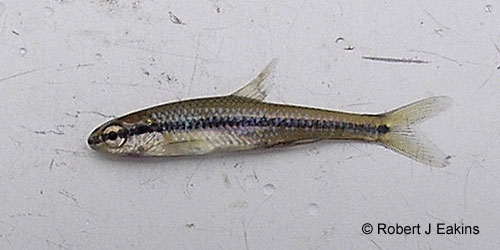
The Bridle Shiner (Notropis bifrenatus), is a slim, silver minnow that is listed as “special concern”, and therefore may become endangered due to a combination of some threats. This fish can grow up to 6 cm in length and lives for approximately 2 years. They prefer unpolluted and highly vegetated rivers and lakes, where they can spawn, catch prey and hide from predators effectively. Like most minnows, they typically prey on larger fish species such as perch, bass and pike. Chemically polluted runoff has caused these areas, especially in Lake Ontario, to become unclear and toxic. Additionally, the invasive species the Eurasian Watermilfoil has been known to clog the spawning sites of the Bridle Shiner. These two factors combined has caused the Bridle Shiner species to drastically decline over the years. Since this fish is of “Special Concern”and not considered “Endangered” (yet), there are no government oriented protective measures for this species.
Fun fact: Bridle Shiners usually only spawn once and this occurs during the Spring or Summer.
Sources:
http://www.ontariofishes.ca/fish_detail.php?FID=40
Subscribe to:
Posts (Atom)